
Table of Contents
Sudoku X
General introduction plus techniques
Welcome to the Sudoku Academy by Sudoku X. In this video series we explore the variants that make Sudoku X special. A variant keeps everything you love about classic Sudoku and adds a twist. All the familiar rules still apply, and every solving technique you have learned still works. On top of that, extra constraints unlock new logic and fresh aha! moments. And your brain loves variation. Today we introduce our signature variant, the one that gave our app its name, Sudoku X.
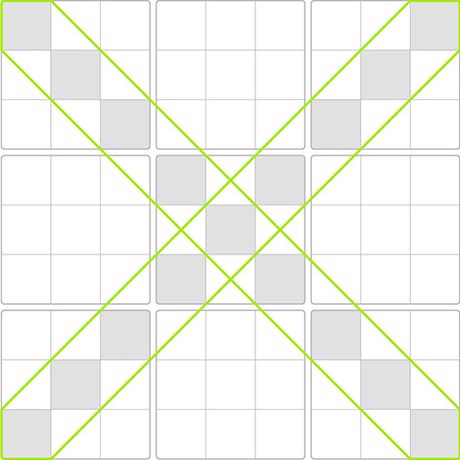
In Sudoku X the two long diagonals join the game. Just like every row, column and block, each diagonal must contain the numbers one to nine exactly once. You can recognise the diagonals on the board by their grey cells. Two extra lines, one simple rule, and a whole new world of deductions. And the best part. Every technique in this video is built right into the Sudoku X app, ready to play and practise.
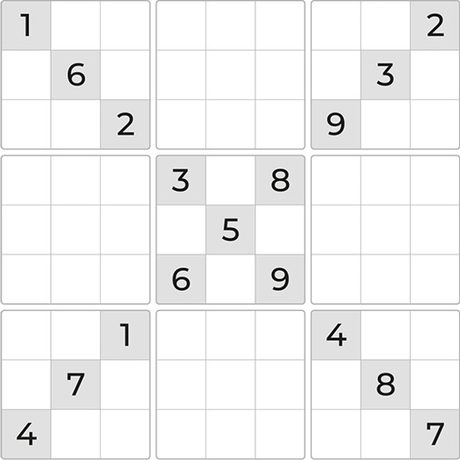
Here is the key insight. A diagonal is simply another house, just like a row or a column. So every technique you already know works on the diagonals too. Naked pairs, hidden pairs, triples, they all apply. So whenever you scan the rows and the columns, scan the diagonals as well.
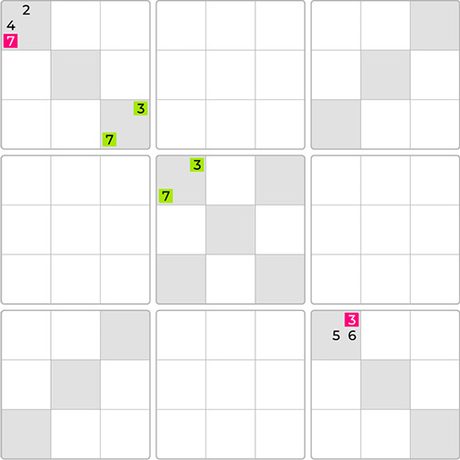
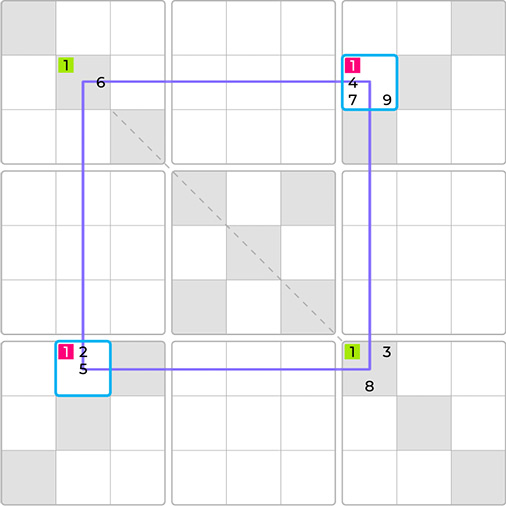
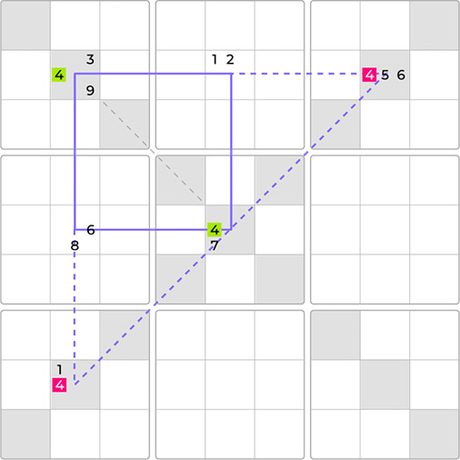
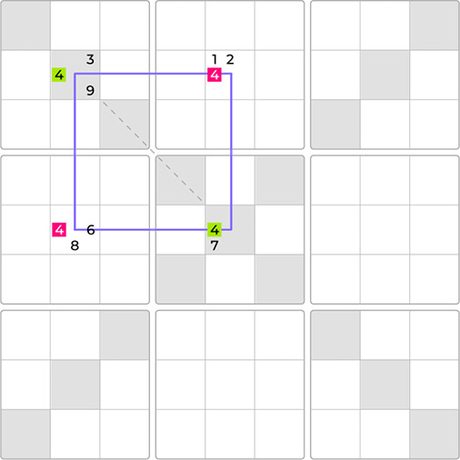
But the diagonals hide a special trick of their own. Take any two cells on the same diagonal. They never share a row, and they never share a column. That means they always form opposite corners of a rectangle. Now suppose a digit can only go in these two cells of the diagonal. Wherever it lands, it sees both remaining corners of the rectangle. So the digit can be eliminated from both corners. Two eliminations that are invisible in classic Sudoku. Sweet!
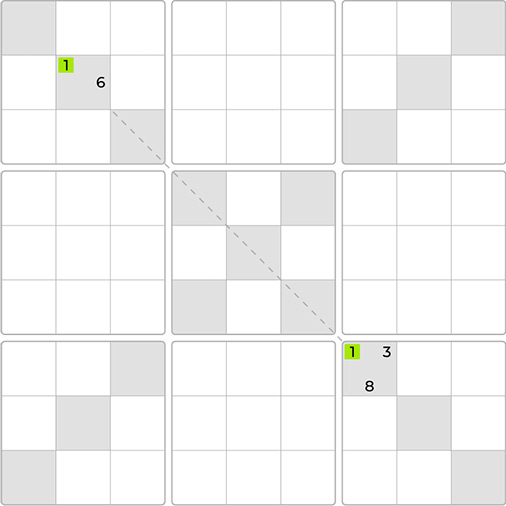
And now, meet the magic cell. The center is the only cell that sits on both diagonals, and that makes it the most constrained cell on the whole board. A normal cell obeys three houses. The center obeys five. Its row, its column, its block, and both diagonals. It is the busiest crossroads of the puzzle, and the place where diagonal logic loves to strike.
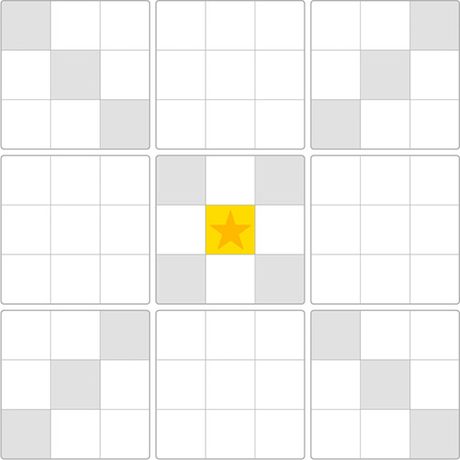
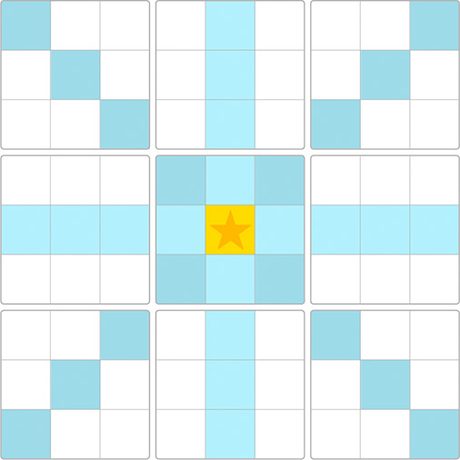
Watch what happens when the center joins in. Suppose a digit is confined to two cells of a diagonal, and one of them is the magic cell. The rectangle logic still works, so the digit vanishes from the two corners completing the rectangle. But there is a bonus. If the digit lands in the center, it also occupies the other diagonal.
Either way the digit reaches the cells where our rectangle crosses that other diagonal, and it can be eliminated there too. And look at the lower cell. Only one candidate is left, so we can confidently place the one and continue our game. Extra eliminations and a free placement, courtesy of the magic cell.
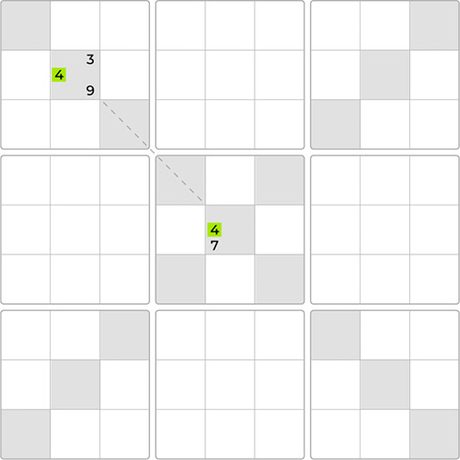
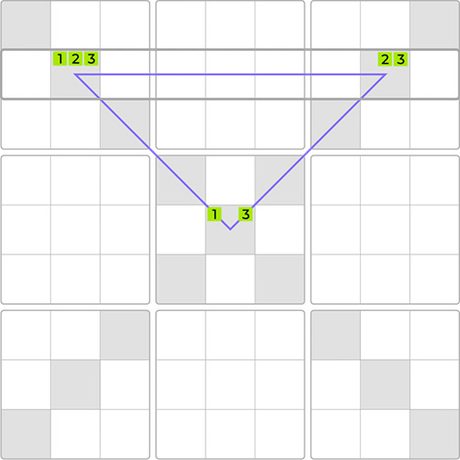
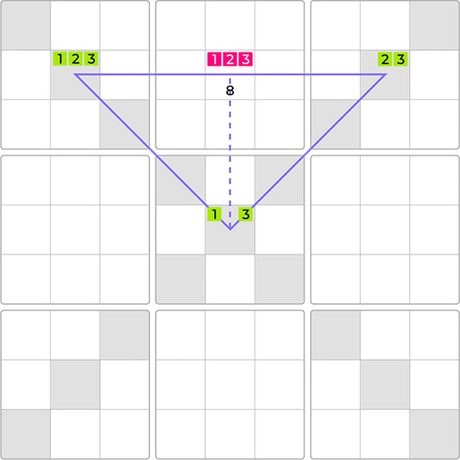
The magic works for bigger groups too. Picture a triangle. The magic cell, plus one cell on each diagonal, with those two outer cells sharing a row. Each of these three cells sees the other two. So if they hold only three candidates between them, all three digits are locked inside the triangle. The cell where their lines cross loses all three candidates at once. Nice!
Ready for the grand finale. Find four cells on the diagonals that form a perfect rectangle around the center, two corners on each diagonal. Every corner sees every other corner, through two rows, two columns and both diagonals. So if these four cells hold only four candidates, those digits lock into the corners. And which cell sees all four corners at once. Exactly, the magic cell. All four digits vanish from the center. And look at what remains. Only one candidate is left in the magic cell, so we can confidently place the five and continue our game. Spectacular!
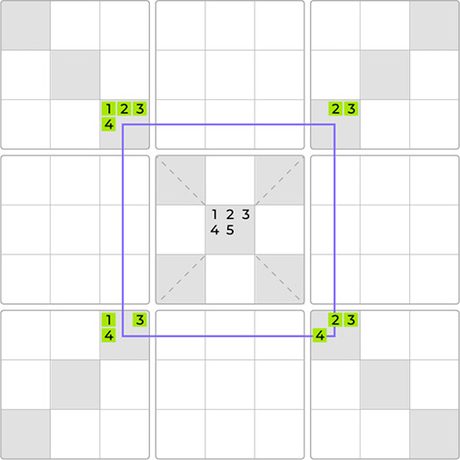
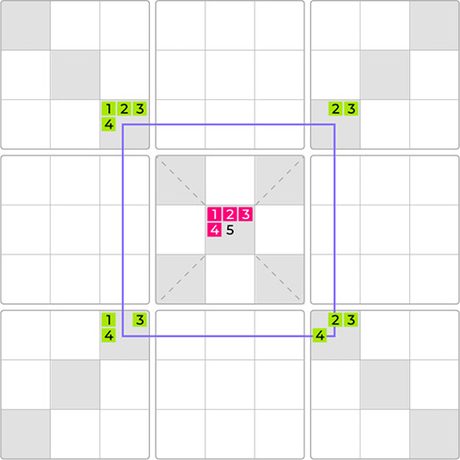
So remember. Everything you know still works. The diagonals are two new houses, and the center is the magic cell where their powers meet. One more thing. You might think that extra constraints make the puzzle easier. Do not be fooled. A Sudoku X typically starts with fewer clues, so the challenge stays just as sharp, and it might even surprise you.
Variants like Sudoku X keep your brain fresh, because new constraints mean new discoveries. Play Sudoku X, master the variant that gave our app its name, and stay tuned for our next video, where four windows open up a hidden world. See you at the Windoku tutorial!
Windokuotes
General introduction plus techniques
Welcome to the Sudoku Academy by Sudoku X. In this video series we explore the variants that make Sudoku X special. A variant keeps everything you love about classic Sudoku and adds a twist. The rules still apply, your techniques still work, and the extra constraints unlock new logic and fresh aha moments. In our last video we promised you a hidden world. Today we open it. Meet Windoku.
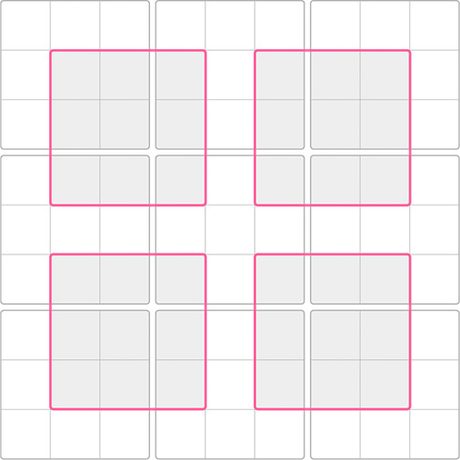
In Windoku, four windows appear on the board, shown as additional shaded blocks. Just like every row, column and block, each window must contain the numbers one to nine exactly once. Four extra squares, one familiar rule. And the best part. Everything in this video is built right into Sudoku X, ready to play and practise.
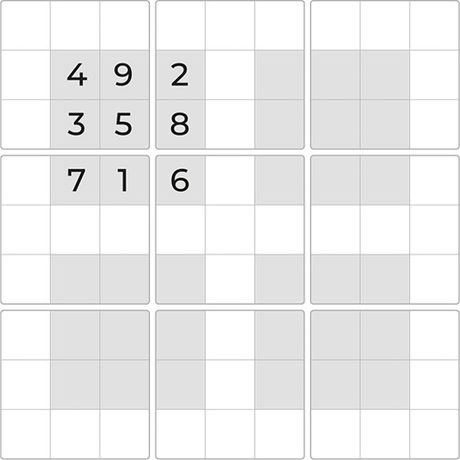
You know the drill by now. A window is simply another house. So naked pairs, hidden pairs, triples, they all work inside the windows too. Whenever you scan the rows, the columns and the blocks, scan the windows as well.
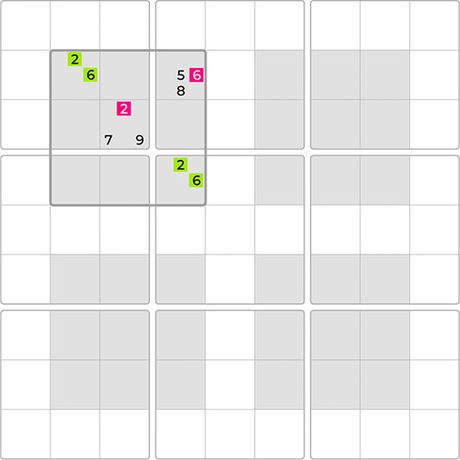
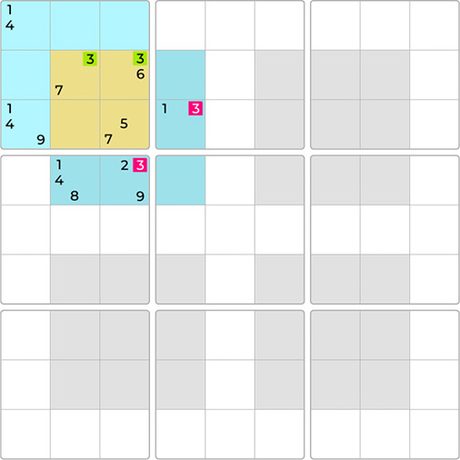
First, a quick refresher. In box-line-reduction, two houses overlap in three cells, shown here in yellow. When a digit in one house can only be placed inside that overlap, it vanishes from the rest of the other house. And notice the blue cells in the row and in the block. Whatever numbers the yellow cells take, the blue cells are left sharing exactly the same numbers. Keep that idea in mind.
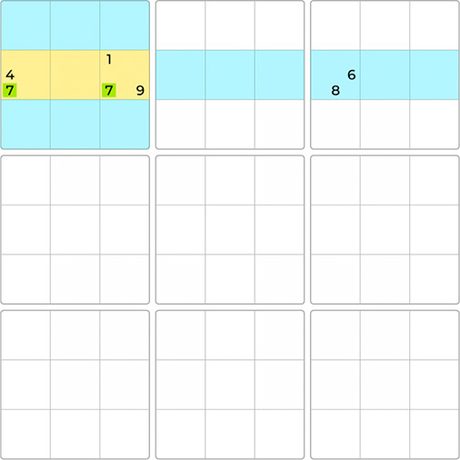
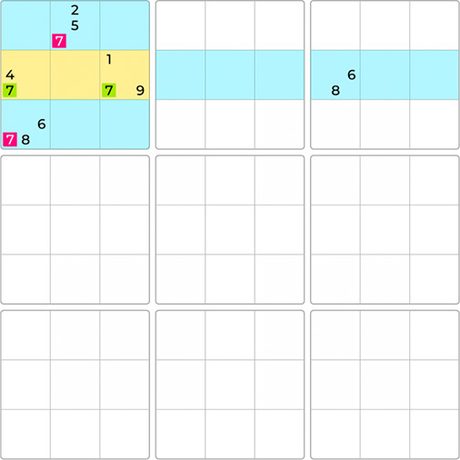
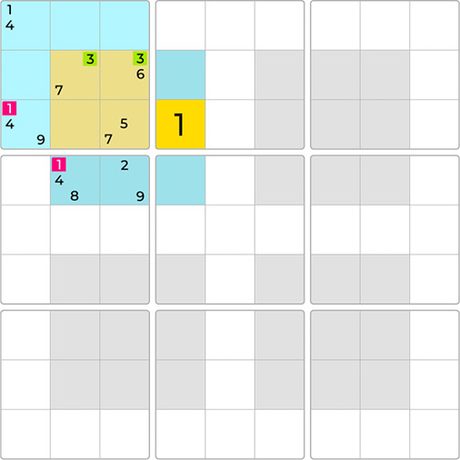
Now here is something classic Sudoku can never give you. In Windoku, a window and a block overlap in a little two by two square, shown in yellow. Two houses sharing a whole area, not just a line. And the same idea strikes again, one size bigger. The five blue outer cells of the block and of the window must hold exactly the same five numbers. So when a digit can only be placed in the yellow square for either the block or the window, it vanishes from every blue cell, block and window alike.
One blue cell holds a single candidate, so we can confidently place the one. The placed one keeps on giving, clearing the remaining ones from the blue cells. And the blue logic works both ways. Our one sits in the window’s blue cells, so it must also appear in the block’s blue cells. One little square, so many deductions. We call this block-in-block-reduction. Sneaky!
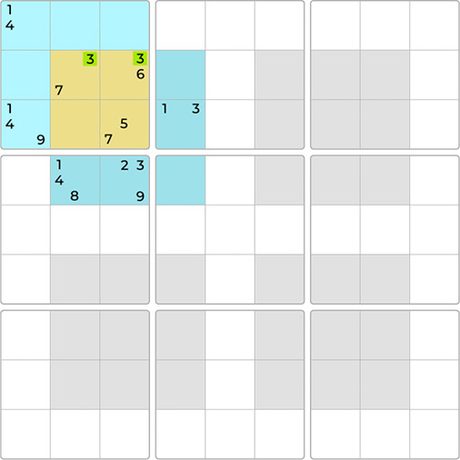
And now for the real magic. Quick question. How many new houses do the four windows add to the board? Four, right? One each? Get ready for a surprise. Look at the three rows passing through the top windows. Together these rows hold every number from one to nine three times, following Sudoku rules. The two windows each take every number once. So the nine leftover cells of these rows, by implication, must contain every number exactly once too. A brand new house, hidden in plain sight.
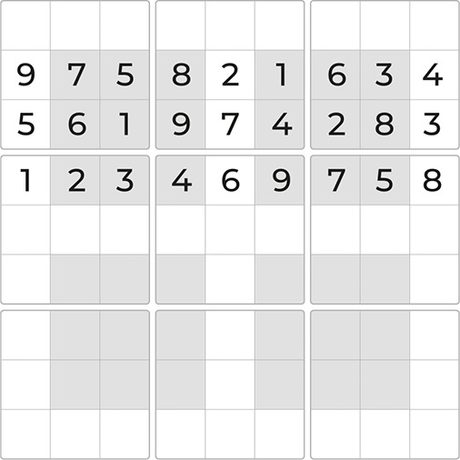
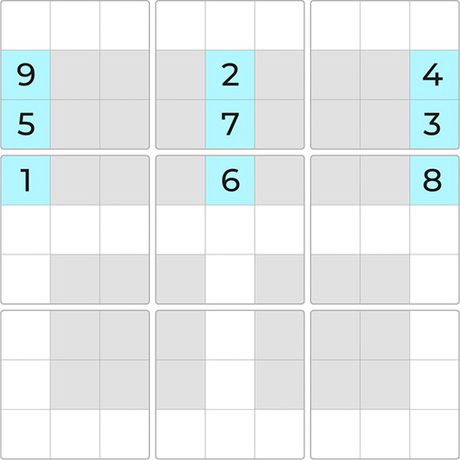
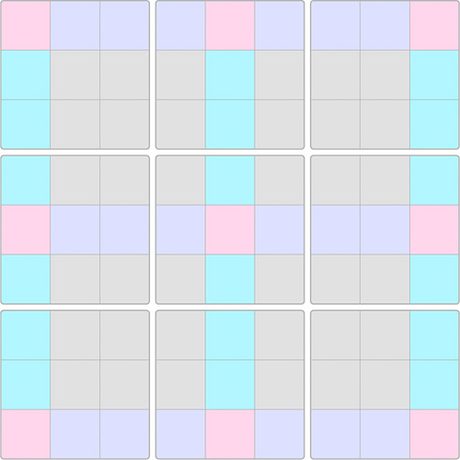
And it does not stop there. The same logic applies to the two windows below. Another hidden house. Now remember, any Sudoku board can be rotated ninety degrees and is still valid. So the columns play the same game. Two more hidden houses. But wait a minute. What about the nine white cells still left open? Exactly. Together they form the last hidden house, and by implication they must hold the numbers one to nine, following Sudoku rules.
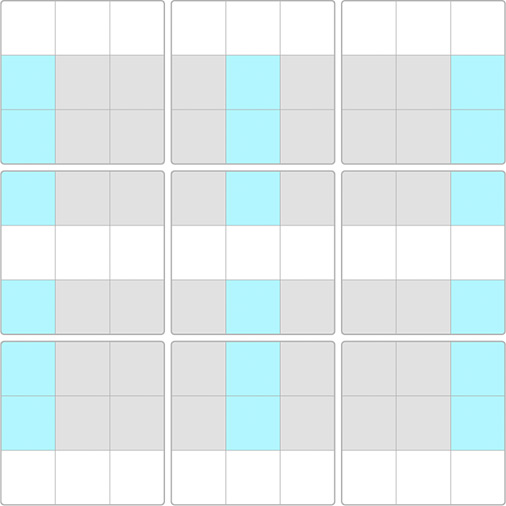
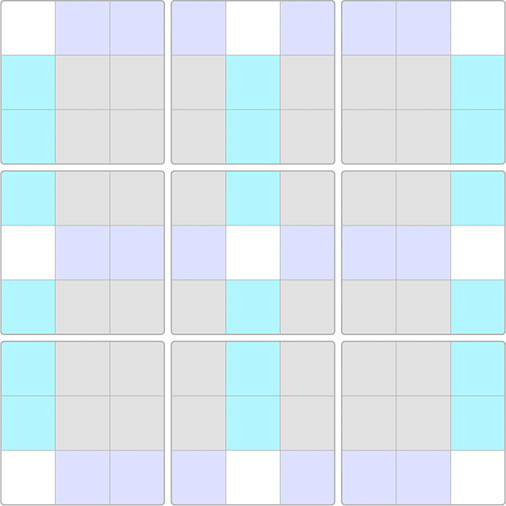
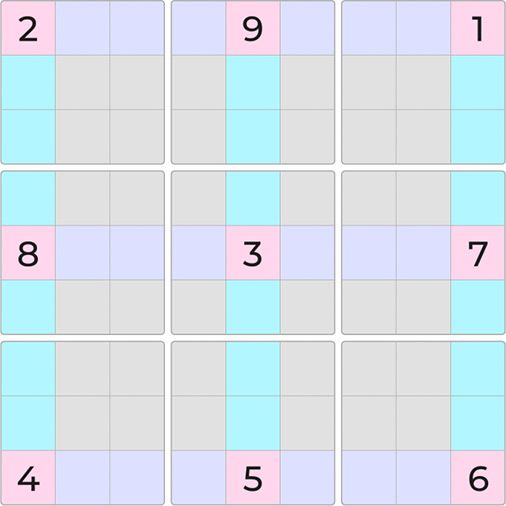
So how many houses did the windows add? Not four. Nine. Four visible and five hidden, a complete second set of nine houses tiling the entire board, laid right over the classic one. And every solving technique you know cuts across all nine of these houses, hidden or not. Every cell on the board now obeys four houses instead of three. You are solving two Sudokus at once. Mind blowing!
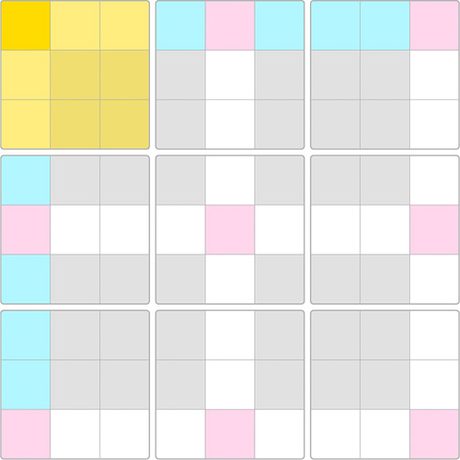
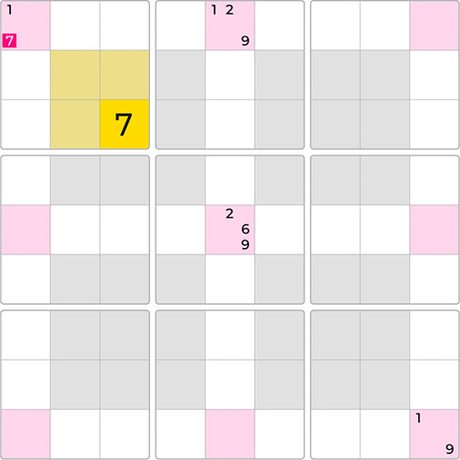
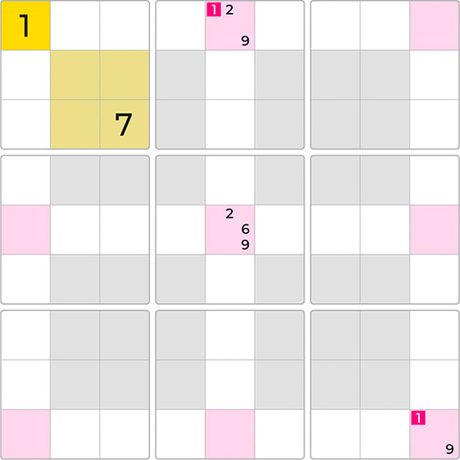
Let us put everything to work in one final chain. In the yellow square there is one place left for the seven, so in it goes. Sitting in the block and the window at once, it knocks the seven out of the very first cell. Only the one remains, so we confidently place it.
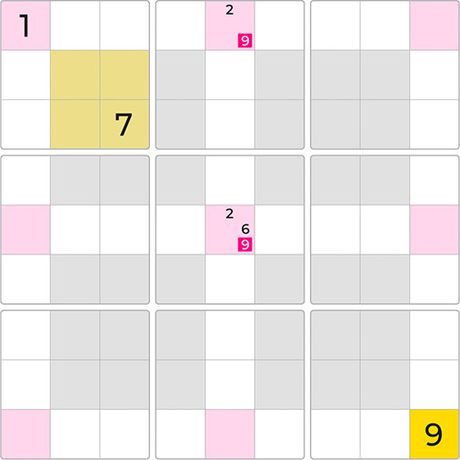
Now watch the hidden house. The one strikes along its row, and through the corner house all the way across the board. In the far corner only the nine remains, so we place the nine. And the nine strikes right back, leaving a single two behind. Placement after placement, the hidden houses keep your game moving. Invisible to classic eyes, obvious to yours. Brilliant!
So remember. Four windows on the board, five more in hiding, and every technique you know works in all of them. And we ease you in. The easier puzzles lean only on the four visible windows. The harder levels bring all nine houses into play. One more thing.
You might think that extra constraints make the puzzle easier. Do not be fooled. A Windoku typically starts with fewer clues, so the challenge stays just as sharp. Play Windoku in Sudoku X, open the hidden world, and see you at the next tutorial!